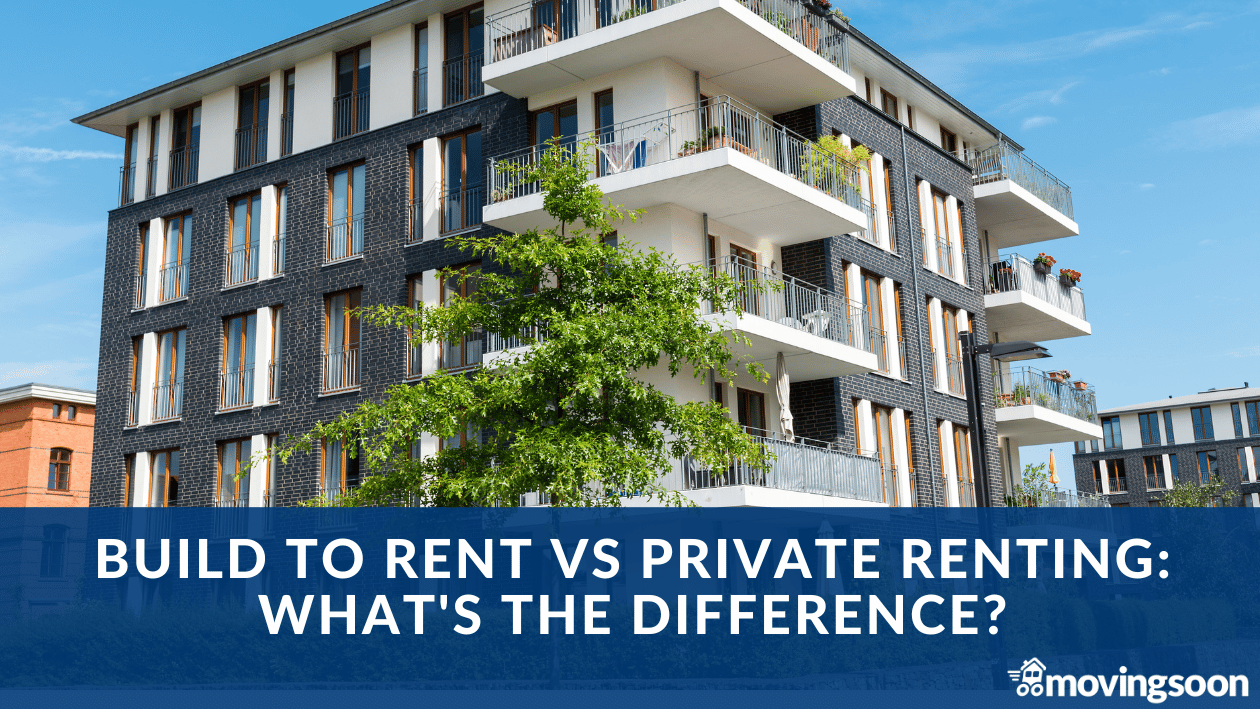
If you’re searching for a home to rent, you’ve probably noticed more developments describing themselves as Build to Rent (BTR).
Unlike traditional private rentals, these homes are purpose-built for renters and are professionally managed, often offering additional facilities and a different rental experience.
At the same time, the private rented sector continues to house millions of people across the UK. So what exactly is Build to Rent, how does it differ from renting from a private landlord, and which option might be right for you?
In this guide, we’ll explain the key differences and highlight what renters should consider before making a decision.
What is Build to Rent
Build to Rent (BTR) refers to homes that have been specifically designed and built for long-term rental rather than for sale.
Instead of being owned by an individual landlord, they’re typically owned by institutional investors, pension funds or property companies and professionally managed by dedicated on-site teams. Many developments include additional facilities such as:
- Resident lounges
- Co-working spaces
- Gyms
- Roof terraces or communal gardens
- Parcel lockers
- On-site maintenance teams
- Community events
The aim is to provide a more consistent renting experience with professional management throughout the tenancy.
How is Build to Rent different from renting from a private landlord?
Although both provide homes to rent, the experience can be quite different.
| Build to Rent | Private Landlord |
|---|---|
| Professionally managed | Managed by an individual landlord or letting agent |
| Purpose-built rental developments | Individual houses or flats |
| On-site management | Usually managed remotely |
| Shared resident facilities | Facilities vary |
| Maintenance teams on site | Depends on landlord arrangements |
| Often designed for long-term renting | Some landlords may eventually sell |
Neither option is necessarily better. It depends on what you’re looking for.
Some renters value the flexibility and personal relationship offered by private landlords, while others prefer the consistency and facilities available within Build to Rent developments.
Is Build to Rent becoming more popular?
Yes. The sector has grown rapidly over the last decade. According to the British Property Federation, there are now more than 146,000 completed Build to Rent homes across the UK, with almost 299,000 homes either completed, under construction or in planning. Completed stock has increased by around 13% over the past year, demonstrating continued investor confidence in the sector.
By comparison, England’s wider private rented sector contains around 4.7 million households, meaning Build to Rent still represents only a relatively small proportion of all privately rented homes, although its share continues to grow.
At the same time, the traditional private rented sector has been shrinking. Research suggests around 290,000 privately rented homes have left the market since 2021 as many individual landlords have sold properties or exited the sector.
This means Build to Rent is increasingly helping offset some of the reduction in rental supply, although it is not replacing the traditional private rented sector.
What do renters look for in a Build to Rent home?
While every renter is different, research suggests several features consistently stand out.
1. Professional management
Many renters value having an on-site management team that can respond quickly to maintenance issues and day-to-day enquiries.
2. Pet-friendly policies
Finding a pet-friendly rental can be difficult.
Many Build to Rent operators actively welcome pets, making them attractive for households with dogs or cats. Research suggests around three-quarters of Build to Rent developments allow pets.
3. Shared amenities
Facilities such as gyms, resident lounges, roof terraces and co-working spaces are becoming increasingly common and can help create a stronger sense of community.
4. Security and convenience
Secure parcel lockers, controlled access systems and on-site staff provide additional peace of mind for many residents.
5. Longer-term stability
Because developments are built specifically for renting, residents often feel more confident that their home is less likely to be sold compared with some individually owned rental properties.
Is Build to Rent more expensive?
Not always. Some developments command higher rents because of the additional facilities and services provided. However, it’s important to consider what’s included. For example, residents may benefit from:
- Faster maintenance responses
- Shared amenities
- Community events
- Concierge services
- Flexible communal workspaces
For some renters these additional features represent good value, while others may simply prefer a traditional rental property with lower monthly costs.
Which option is right for you?
There’s no single answer.
Build to Rent may suit you if you value:
- Professional management
- Modern homes
- Shared facilities
- Community living
- Longer-term rental security
Traditional private renting may be preferable if you’re looking for:
- Greater choice of locations
- Individual houses
- Lower monthly rents
- A more personal landlord relationship
The best option depends on your budget, lifestyle and the type of home you’re looking for.
Summary
Build to Rent is becoming an increasingly important part of the UK’s rental market. Although it still represents a relatively small proportion of all privately rented homes, the sector continues to expand while the number of homes owned by individual landlords has reduced in recent years. For renters, that’s good news. It provides another option alongside traditional private renting, offering professionally managed homes, modern facilities and, in many cases, greater long-term stability.
As with any move, it’s worth comparing the features, costs and location before deciding which type of rental best meets your needs.